You go to buy a train ticket. You find that you are 1 cent short and didn't bother to bring your credit card. Bummer. So to paliate your annoyance at missing the professional conference you were going to where, little did you know, you would have met your future mentor and business partner where your combined skills would have created a revolutionary new product and made you both multi-millionaires... you go the station café for a coffee.
As chance would have it, a Jehovah's Witness is having a break from their 'ministering' but spots a potential victim and says hello.
Your guard is down and as you recount your unfortunate story he makes sympathetic noises and even jokes that if he had been behind you in the queue he would certainly have given you the extra cent you needed for your ticket.
 You warm to him, and, to cut a long story short, accept an invitation to a meeting, meet a whole bunch of 'nice' people who welcome you in, you struggle for a long time before eventually 'accepting' their beliefs, spend years standing outside metro stations with religious magazines in your hand getting in everyone's way, renounce your ambition and drive, sink into misery and are overwhelmed by feelings of uselessness and pointlessness, and end up jumping in front of a train on the very same line the train you would have taken travelled, without you, all those unhappy years ago, for the want of a cent, and killing yourself.
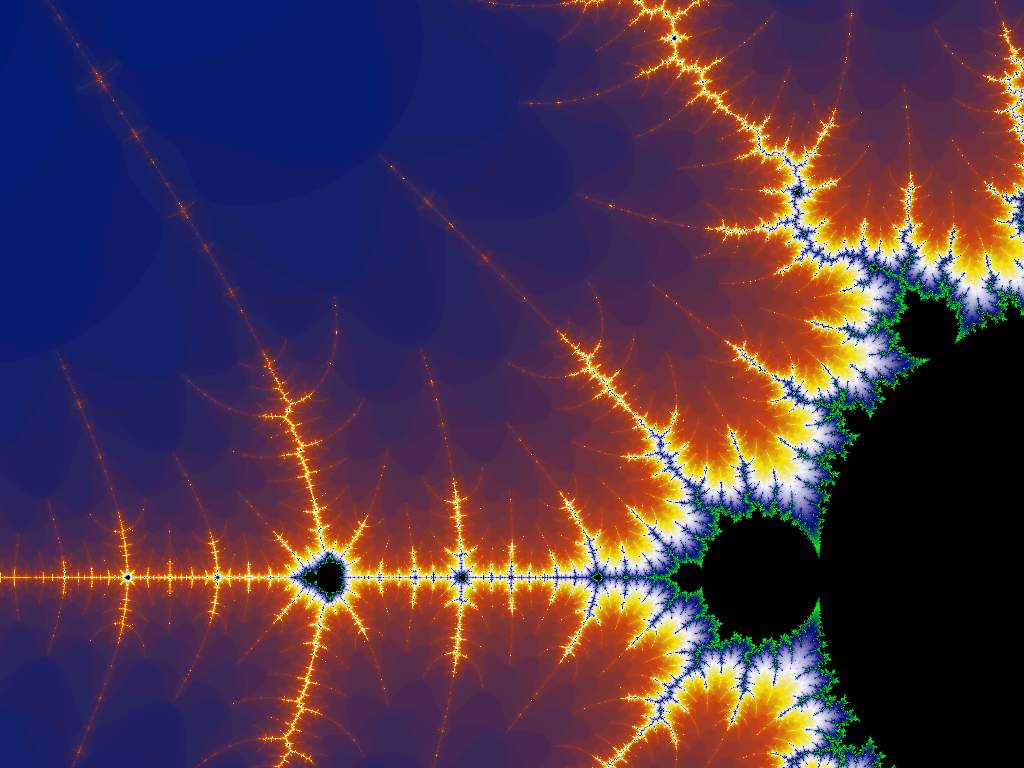
This is an example of chaos theory. The idea that a very small change in the initial starting conditions can cause wildly differing results.
A simpler example is that you're in a traffic jam and you miss your train to the airport by 30 seconds. The next train is in 30 minutes. When you eventually get to the airport, you've missed your plane. The next available flight isn't until tomorrow. A 30 second lateness seems to be responsible, ultimately, for a whole day's delay.
Mathematicians call this a non-linear effect, where the initial small thing can lead on to much bigger things.
 A classic example is the weather. Why can't we accurately predict what the weather will be more than a few days in advance, if that? Because the system is far too complex to be able to take into account all the starting conditions, and even less so all the possible consequences.
Despite the name, the use of chaos here doesn't imply totally random events. Indeed, chaos theory is about separating totally random phenomena, which are by definition totally unpredictable, from chaotic ones, which have some chance of being predicted correctly?
 The final example I'll give is actually the most famous: the Butterfly Effect. This is a much-quoted and purposely over-the-top scenario where the gentle flapping of a butterfly's wings in one country causes, eventually, a horribly destructive tornado on another continent.
Chaos theory can be applied to many real-world 'systems', from a leaky tap to the orbit of Pluto. The prices of shares and organisations are also seen to experience chaotic behaviour, where small changes can set of a chain reaction of monumental importance, or a major upheaval can go relatively unnoticed.
So there you have it, more than you probably ever need to know about chaos theory; aren't you glad you didn't ask?
See you in the gene pool
FrabulousFrog